


The Lost Boys of Sudan
Who Were the Lost Boys of Sudan? In the mid-1980s, civil war erupted in Sudan. Government-backed militias launched brutal attacks on villages in southern Sudan, killing numerous civilians. Thousands of...

More than a year after the fall of Syria’s authoritarian regime, millions of Syrians are still rebuilding their lives, whether in host countries across the Middle East, in resettlement destinations around the world, or, increasingly, back home in Syria itself. The road to stability is long and complex, and it looks different for every family.
Since 2014, RefugePoint has been helping Syrian refugees find long-term stability and safety. Today, there are opportunities to deepen self-reliance programming in Syria, as well as opportunities to help Syrian refugees return home, a process called repatriation. This post explores the roots of the Syrian refugee crisis, where things stand today, and how RefugePoint continues to help Syrian refugees find lasting solutions.
The Syrian civil war began in March 2011, but its roots run deeper. A combination of political repression, economic instability, and environmental factors contributed to the unrest. Decades of authoritarian rule under President Bashar al-Assad’s regime created widespread dissatisfaction. The Arab Spring uprisings in neighboring countries further inspired protests in Syria, which were met with brutal government crackdowns.
Climate change also played a role: severe droughts between 2006 and 2010 devastated Syrian agriculture, forcing many rural families to migrate to urban areas. The resulting economic strain and overcrowding fueled tensions, setting the stage for widespread unrest and conflict.
As tensions escalated, violence engulfed cities and towns across Syria. Targeted attacks on civilians made normal life impossible. The Syrian government’s forces were implicated in numerous attacks on civilians, including children. The government’s use of chemical weapons in incidents like the 2013 Ghouta attack and the deployment of barrel bombs have caused widespread destruction and thousands of civilian deaths since 2012. Essential services such as healthcare, education, and clean water became scarce, leaving families with no choice but to flee. By 2024, over 12 million Syrians had been displaced, with more than 5 million seeking refuge in other countries and 7 million internally displaced.
In a historic turn of events, Syrian President Bashar al-Assad fled the country in December 2024 following a rapid offensive by opposition forces. The Islamist group Hayat Tahrir al-Sham (HTS) played a pivotal role in this military campaign, capturing key cities such as Aleppo and forcing regime forces to withdraw. l-Assad’s exile to Moscow marked the end of over a decade of authoritarian rule, opening the door for millions of displaced Syrians to return home.
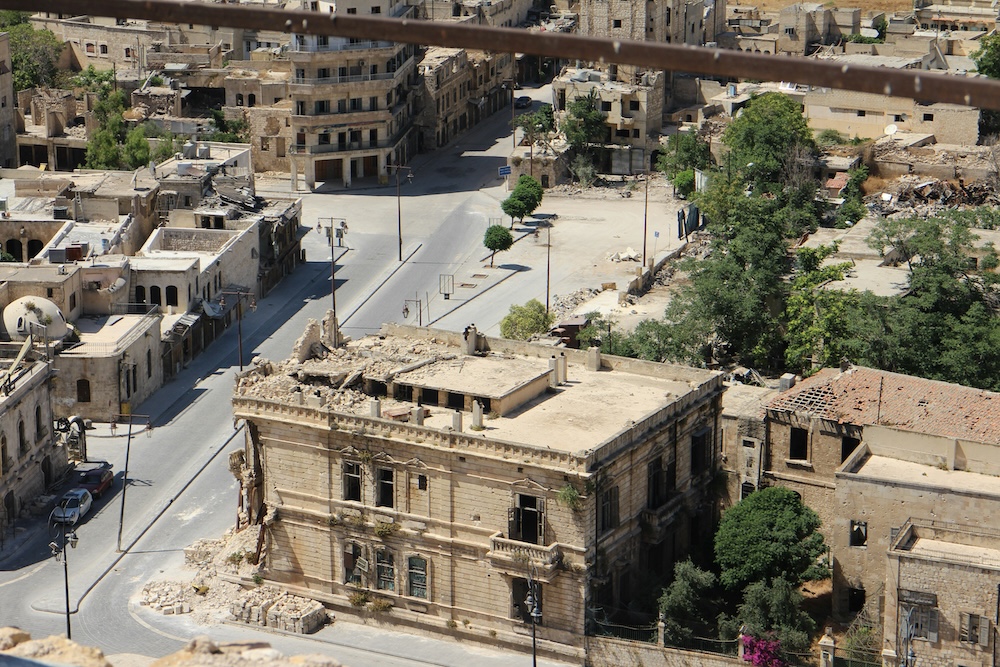
The city of Aleppo, 2017, showing the scale of destruction caused by the ongoing war. Photo: Aladdin Hammami

Layth with his grandfather in Syria, 2026
Ahmed al-Sharaa, who led the rebel group HTS, was named interim president of Syria in early 2015. After leading the coalition that ousted Assad, HTS disbanded and called for the dissolution of other military groups as well. Al-Sharaa is expected to lead Syria for several years, until elections are able to be conducted.
In 2025, the interim government reported the country’s first budget surplus in decades, which gives hope to many displaced Syrians, like RefugePoint’s own Deployment Program Officer, Layth Sabbagh. Layth recently returned to Syria and reports progress on many fronts, from equitable electricity distribution to a recovering economy. “There are no more airstrikes, there’s no more front line, there are no more political prisoners,” he reports. “I can freely express myself, in a way that I can’t do anywhere in the region. I’m no longer afraid of being kidnapped at a checkpoint and held for ransom.”
For many Syrians, Layth reports that the largest barrier to returning home is that many houses, schools, and hospitals were physically destroyed during airstrikes carried out by the former government. Rebuilding is a slow process, but it is happening.
The good news is that many Syrian refugees have been able to repatriate (return home). Since the Assad regime’s fall, around 1.5 million Syrian refugees have returned to Syria to rebuild. More than 2 million internally displaced Syrians have also returned to their home provinces.
While many have returned home, millions of displaced Syrians remain in host countries. The decision to return home is complex, and many are waiting for Syria to further stabilize politically and economically before they will consider returning. There are still Syrian refugees in many countries, such as:
Smaller numbers have resettled in Europe, North America, and beyond. Canada, for instance, welcomed over 100,000 Syrians through resettlement and labor mobility programs, demonstrating the potential for refugees to build their lives in safe, new countries around the world. RefugePoint has supported Syrian refugees across the Middle East and in more distant countries such as China, Somalia, Trinidad and Tobago, and Thailand.
Amid this global crisis, RefugePoint has been working to (a) develop and scale self-reliance programs for refugees living in the countries to which they fled, and (b) find safe, new homes for refugees through resettlement, labor mobility, and family reunification pathways.
Directly, RefugePoint has helped nearly 8,200 Syrian refugees access resettlement opportunities to the US, Canada, Australia, EU, and other countries since 2014, with the goal of helping them resettle to safe, new homes. Through our partnership with the UN Refugee Agency, our staff are placed in key UNHCR locations around the world to assist with the identification and referral of refugees for resettlement consideration by governments worldwide.
In 2024-25, RefugePoint’s resettlement and child protection experts based in Ankara and Gaziantep in Turkiye traveled to the Syrian border and helped process repatriation cases, helping more Syrians return home.
In host countries like Türkiye and even within Syria itself, self-reliance programming is crucial to help refugees rebuild their lives. The Refugee Self-Reliance Initiative (RSRI), a strategic initiative of RefugePoint that has a global multi-stakeholder network of more than 650 organizations, supports organizations working with Syrian refugees and/or Internally Displaced Persons (IDPs) and host populations in a number of ways. The RSRI, through research and sharing of best practices, helps humanitarian organizations design programs that support the economic inclusion and social protection of refugees. Through the Self-Reliance Index, the first-ever global tool for measuring the progress of refugee households toward self-reliance , organizations are also measuring the impact of their work, and learning from the results to strengthen their programs. Seven organizations out of the broader RSRI network are actively using the tool in Syria and neighboring countries.
RefugePoint has also helped Syrian refugees reunite with family members living abroad. In a recent RefugePoint impact report, a Resettlement Expert named Geoffrey recounted the story of brothers Ahmed* and Amir*, who survived the devastating earthquake in southeastern Türkiye in February 2023. Tragically, they lost their parents and sister in the disaster. While Ahmed emerged physically unscathed, Amir sustained injuries requiring an amputation.
Geoffrey worked to ensure a stable future for the boys. After securing legal guardianship for Amir and facilitating family reunification with their aunt in the Netherlands, both brothers were able to resettle and begin rebuilding their lives. Stories like theirs illustrate how RefugePoint is well-placed to address the complex needs of refugees.
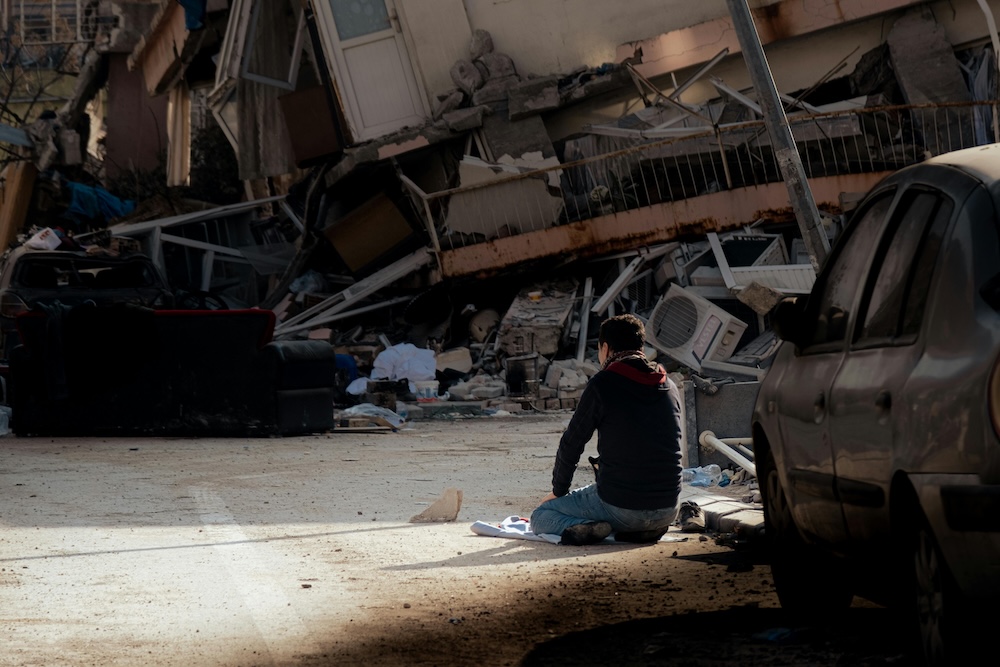
A man sitting outside a building that collapsed during the earthquake in Türkiye. Photo: Doruk Aksel Anıl
Addressing the Syrian refugee crisis requires collective effort. While international organizations like the UN Refugee Agency play a crucial role, local groups such as the White Helmets provide vital on-the-ground support.
RefugePoint’s approach—focusing on self-reliance and life-changing solutions—offers a unique way to create long-term impact. By donating to RefugePoint, you can help Syrian refugees and other displaced people around the world rebuild their lives.
*Names changed for protection.
Cover photo: Salah Darwish

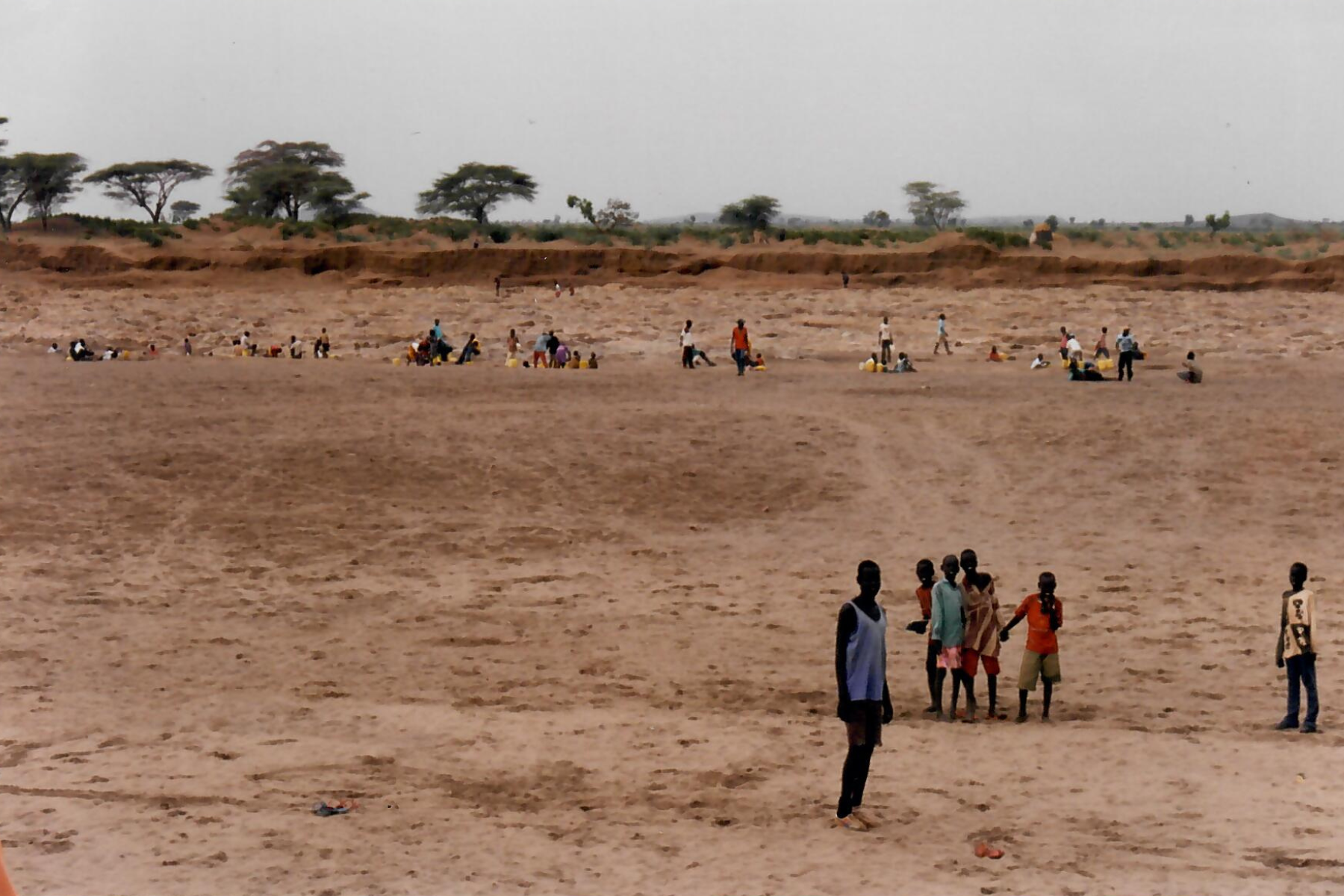


Make a gift to deliver lasting solutions for refugees and help them to build new lives.
By subscribing you agree to with our Privacy Policy & provide consent to receive updates from Refuge Point.
Your gift will be used to deliver lasting solutions for refugees around the world, and help them rebuild their lives in safety.
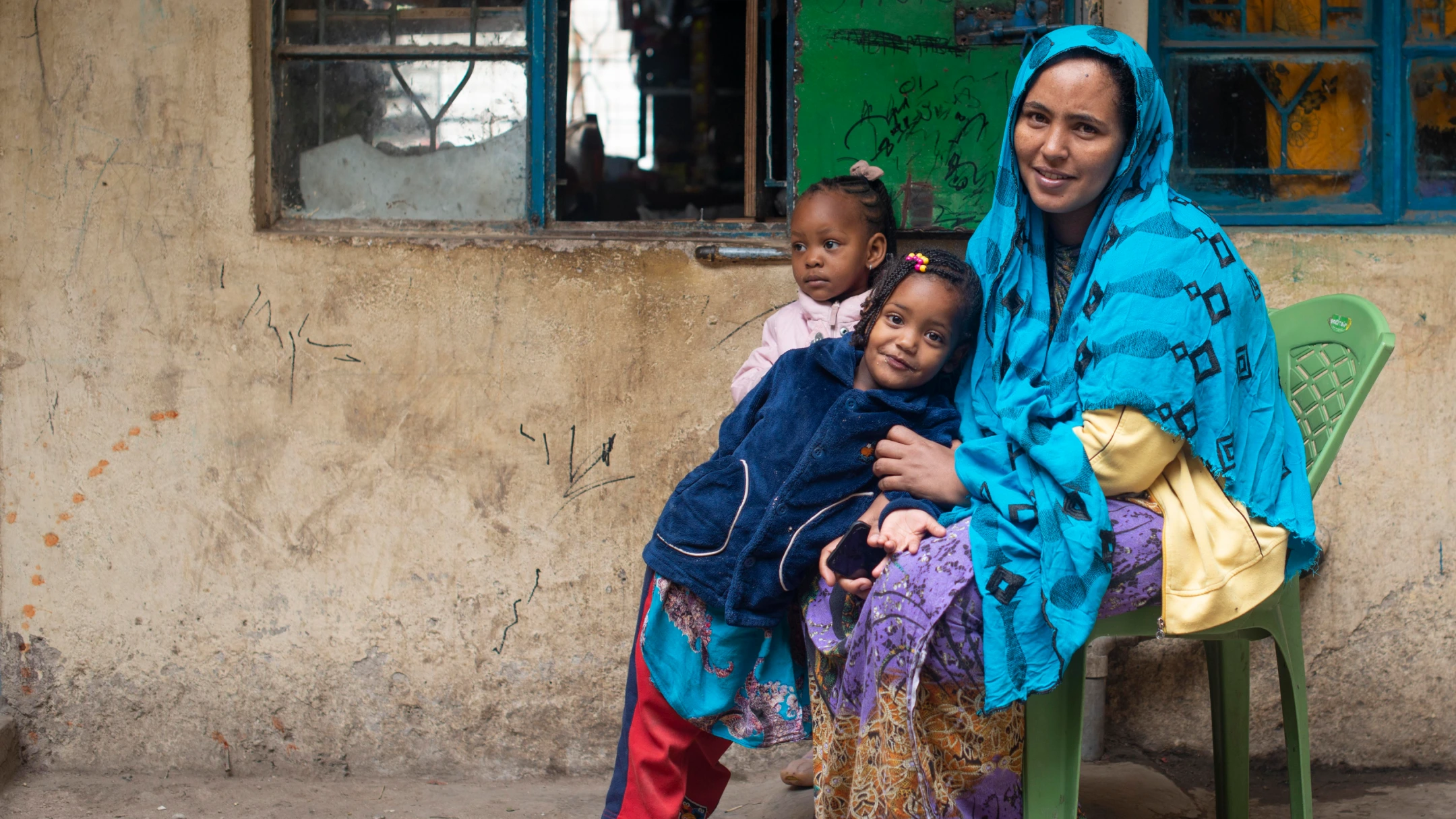
Stay in the know about our work with refugees: get RefugePoint news, refugee stories, events, and more delivered right to your inbox.
This site is protected by reCAPTCHA and the Google Privacy Policy and Terms of Service apply.
